
Hi Friends of Intelligentwomenonly.com
I've moved my web site and blog, and you arrive there via the usual http://intelligentwomenonly.com It looks a little different, and zippier I think, but not a whole lot. I have short hair and have added brain fitness to my list of topics. Lots of new stuff coming up although I'm not ready for a webinar I'm sorry to say. But I'm going to webex.com to see if I can figure it all out. See you soon at the new site with the same good stuff about negative self-talk, brain fitness, gender differences psychosocial, cultural stuff, and odds and ends about books, movies, sex, trends, and life's transitions.
Sunday, June 24, 2012


Friday, June 22, 2012
Sleep is Important to Body/Mind and Everything Else I Guess
A Wall St. Journal article, June 5, about sleep, gender differences and similarities, and import for relationships. It reminded me about how ever health care person I've seen in the last 6 months has reminded me how important sleep is to my teeth, energy level, lung capacity, running capability, brain function, and heart disease. And I don't have anything wrong with me except routine dental stuff plus I sleep like a log. Must be a new trend. Here are a couple of interesting facts and quotes.
• Men tend to be night owls. Women are 50% more likely to be insomniacs than men.
• Most adults need about 7-9 hours of sleep a night.
• Twenty three percent of people with partners sleep in separate beds because of too much sleepus interuptus (made up phrase of course); caused by preferences for differing room temperature, or sheet steeling, too much movement, lights on late. Sleeping together is still best for overall health.
• No surprise that we don't sleep as well with our partner if we've had a run in during the day.
" . . . the psychological benefits we get having closeness at night trump the objective costs of sleeping with a partner," according to sleep expert Dr. Wendy M.Troxel.
• Men tend to be night owls. Women are 50% more likely to be insomniacs than men.
• Most adults need about 7-9 hours of sleep a night.
• Twenty three percent of people with partners sleep in separate beds because of too much sleepus interuptus (made up phrase of course); caused by preferences for differing room temperature, or sheet steeling, too much movement, lights on late. Sleeping together is still best for overall health.
• No surprise that we don't sleep as well with our partner if we've had a run in during the day.
" . . . the psychological benefits we get having closeness at night trump the objective costs of sleeping with a partner," according to sleep expert Dr. Wendy M.Troxel.

Wednesday, June 20, 2012
"Newddhists' — A Coined Word (by James Atlas) for Westerners Hungering for Balance
Also called, "nightstand Buddhists" by the author of the NYTimes Op-Ed, 6/17/2012 as he writes about a spiritual retreat he attended in northern Vermont. Atlas sounds like a rank newbie to the concepts of bare attention, psychological distance, the no-self, and the rest of the many values of meditation, whether it is based on Buddhism — or not.
I was uncomfortable with the author's approach — making it all sound mystical and strange, though beneficial. As many of you know, meditation, mindfull or mindempty, is a great route to brain fitness. It improves immune response and mood, reduces stress, increases resistance to distraction and strategic allocation of attention, plus generally increases emotional self-regulation. How else can you get so much for so little effort and time?
I was uncomfortable with the author's approach — making it all sound mystical and strange, though beneficial. As many of you know, meditation, mindfull or mindempty, is a great route to brain fitness. It improves immune response and mood, reduces stress, increases resistance to distraction and strategic allocation of attention, plus generally increases emotional self-regulation. How else can you get so much for so little effort and time?
Monday, June 18, 2012
Running in Moderation Provides the Most Benefits
Most of my assets, I attribute to running: emotional level headedness, coping skills, general low level of anxiety, good immune system and general health. Now I find that even though I'm not running marathons, or even running 5 days a week. it's a good thing! An Argument for the Slow-but-Steady Approach
People who ran 1 to 20 miles per week at a pace of 10 or 11 minute miles reduced their risk of dying than those who ran more than 20 miles a week and those that ran faster than 7 minute miles. Regular jogging increases longevity. Hurray!
Since I'm now understanding that brain fitness improves with aerobic activity, I'm jogging more frequently, but for shorter periods of time, and worrying less about speed. And I'm feeling sharper. The placebo effect?
In a week, the new site will be up and running. You'll get to it the same way, www.intelligentwomenonly.com and it will look similar, and have all the old posts, plus new pictures and information. Remember change is good for brain function!
People who ran 1 to 20 miles per week at a pace of 10 or 11 minute miles reduced their risk of dying than those who ran more than 20 miles a week and those that ran faster than 7 minute miles. Regular jogging increases longevity. Hurray!
Since I'm now understanding that brain fitness improves with aerobic activity, I'm jogging more frequently, but for shorter periods of time, and worrying less about speed. And I'm feeling sharper. The placebo effect?
In a week, the new site will be up and running. You'll get to it the same way, www.intelligentwomenonly.com and it will look similar, and have all the old posts, plus new pictures and information. Remember change is good for brain function!
Thursday, June 14, 2012
Hi visitors and friends of intelligentwomenonly.com The new, upgraded, redesigned web site and blog should be done by the end of next week. All will be pretty much the same, with posts from the last two years still available and continuing Monday, Wednesday, Friday posts on the same and/or slightly different topics for intelligent women.
Meantime, I'll keep putting up current articles on topics of interest: sharp brains, eliminating negative self-talk, gender, women's psychology, stress reduction, brain/physical fitness, the newest research on thinking, translated into application for today.
Meantime, I'll keep putting up current articles on topics of interest: sharp brains, eliminating negative self-talk, gender, women's psychology, stress reduction, brain/physical fitness, the newest research on thinking, translated into application for today.
Wednesday, June 13, 2012
Good Health for Brains by Alvaro Fernandez
Here are 5 habits to increase your brain's good functioning. The tips come from Alvaro Fernandez, founder of Sharpbrains.com. Good stuff. I only copied the first five because they're the best, but you can see the others if you're interested at sharpbrains.com
I'm working on this stuff with intensity and delighted to forget about crossword puzzles.
 Let’s review some good lifestyle options we can follow to maintain, and improve, our vibrant brains.
.
.
I'm working on this stuff with intensity and delighted to forget about crossword puzzles.
The Ten Habits of Highly Effective Brains
By: Alvaro Fernandez
 Let’s review some good lifestyle options we can follow to maintain, and improve, our vibrant brains.
.
.
- Learn what is the “It” in “Use It or Lose It”. A basic understanding will serve you well to appreciate your brain’s beauty as a living and constantly-developing dense forest with billions of neurons and synapses.
- Take care of your nutrition. Did you know that the brain only weighs 2% of body mass but consumes
 over
20% of the oxygen and nutrients we intake? As a general rule, you
don’t need expensive ultra-sophisticated nutritional supplements,
just make sure you don’t stuff yourself with the “bad stuff”.
over
20% of the oxygen and nutrients we intake? As a general rule, you
don’t need expensive ultra-sophisticated nutritional supplements,
just make sure you don’t stuff yourself with the “bad stuff”. - Remember that the brain is part of the body. Things that exercise your body can also help sharpen your brain: physical exercise enhances neurogenesis.
- Practice positive, future-oriented thoughts
until they become your default mindset and you look forward to every
new day in a constructive way. Stress and anxiety, no matter
whether induced by external events or by your own thoughts, actually
kills neurons and prevent the creation of new ones.
 You can think of chronic stress as the opposite of exercise: it prevents the creation of new neurons.
 - Thrive on Learning and Mental Challenges. The point of having a brain is precisely to learn and to adapt to challenging new environments. Once new neurons appear in your brain, where they stay in your brain and how long they survive depends on how you use them. “Use It or Lose It” does not mean “do crossword puzzle number 1,234,567″. It means, “challenge your brain often with fundamentally new activities”.
Monday, June 11, 2012
I'm still reeling from much information and many mental gyrations as a result of sharpbrains.com virtual Summit. Here are a couple of new surprising facts:
• Multitasking isn't good for your brain. The word toxic was used which seems like overkill to me, but . . .
The impression I got was that brains are wired to work quickly and efficiently. When you're working on several different projects and types of thinking at one time, (watching TV, talking on the phone, knitting OR taking notes on a lecture, planning an upcoming meeting, and thinking about your new blog logo), your neural pathways have to make detours, take longer to arrive at planned destinations, and your attention, my guess without fMRI.
I am finding that I am doing much better with one mental project at a time, although there are definitely seemingly mindless tasks that I can do simultaneously. e.g. watching a boring TV program and a reading a boring newspaper article. Of course I don't remember much of either, but it doesn't matter other than for me to wonder why I'm bothering with boring stuff.
I'd like to hear what other women' experience is with more single focus, less multifocus. My experience is that men are generally more single focused than we are — and it can sometimes be annoying, particularly when I'm multifocusing.
• Multitasking isn't good for your brain. The word toxic was used which seems like overkill to me, but . . .
The impression I got was that brains are wired to work quickly and efficiently. When you're working on several different projects and types of thinking at one time, (watching TV, talking on the phone, knitting OR taking notes on a lecture, planning an upcoming meeting, and thinking about your new blog logo), your neural pathways have to make detours, take longer to arrive at planned destinations, and your attention, my guess without fMRI.
I am finding that I am doing much better with one mental project at a time, although there are definitely seemingly mindless tasks that I can do simultaneously. e.g. watching a boring TV program and a reading a boring newspaper article. Of course I don't remember much of either, but it doesn't matter other than for me to wonder why I'm bothering with boring stuff.
I'd like to hear what other women' experience is with more single focus, less multifocus. My experience is that men are generally more single focused than we are — and it can sometimes be annoying, particularly when I'm multifocusing.
Friday, June 8, 2012
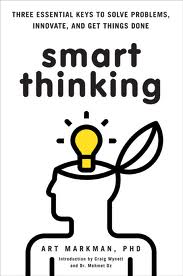
Here's a part (the conclusion) of an article about problem solving by Art Markman, a PT blogger. So right on!
May 21, 2012Is There a Formula for Smart Thinking?
" In general, an impasse feels so frustrating, because you don’t know what to do next. That feeling of being stuck makes you anxious. Getting anxious and stressed when trying to solve a problem is not usually a recipe for successful thinking.
Problem solving can be stressful in part because you have a lot of
mental habits that you have generated through years of practice
thinking. Unfortunately, not all of those mental habits are
conducive to smart thinking.
 The
thinking habits you have are not part of some fixed mental toolkit
that you were born with. Those habits were created by going to school
for years and then they were reinforced by all of the thinking you
have done since then. Smarter thinking requires developing new habits
to complement the ones that have already brought you success. It
also requires changing habits that are getting in the way of smart
thinking. When you reach an impasse, you need to have habits that allow
you to do for yourself what I helped my son to do. You have to develop
habits to create high quality knowledge and habits to help you find
it when you need it."
The
thinking habits you have are not part of some fixed mental toolkit
that you were born with. Those habits were created by going to school
for years and then they were reinforced by all of the thinking you
have done since then. Smarter thinking requires developing new habits
to complement the ones that have already brought you success. It
also requires changing habits that are getting in the way of smart
thinking. When you reach an impasse, you need to have habits that allow
you to do for yourself what I helped my son to do. You have to develop
habits to create high quality knowledge and habits to help you find
it when you need it."
Wednesday, June 6, 2012
Gender Pay Gap Thrives from 22-65
While intelligentwomenonly.com is recharging, I'll send out links to articles of interest for smarties.
"On average, women with college degrees or higher see their pay stop growing at about age 39, while men continue to see wage increases until they’re 48, according to a new report by PayScale, an online compensation data company."
http://lifeinc.today.msnbc.msn.com/_news/2012/06/04/11994886-gender-pay-gap-persists-as-women-age?lite
"On average, women with college degrees or higher see their pay stop growing at about age 39, while men continue to see wage increases until they’re 48, according to a new report by PayScale, an online compensation data company."
http://lifeinc.today.msnbc.msn.com/_news/2012/06/04/11994886-gender-pay-gap-persists-as-women-age?lite
Tuesday, June 5, 2012
I'm at Sharpbrains.com Summit — Virtual Conference
I'm going to attend the sharbrains.com virtual conference the 7th and 8th of June. I'm not quite sure what to expect, but I'm looking forward to it. Lots of great speakers on topics all related to brain health and fitness, thinking, for people of all ages, all stages. I'll be Tweeting about it daily. If you're interested, my Tweets come to intelligentwomenonly.com or you can follow me on Twitter, @drtingley
Monday, June 4, 2012
Update on Intelligentwomenonly.com
Hi readers, regular and new —
I'm going to take time off (a week, or possibly two) from posting as I redesign, rewrite, and reorganize, intelligentwomenonly.com — with help from web designer, Debbie Hulbert. In the meantime, I'll post previous popular posts for your consumption and links to articles that might be of interest. You can always browse the categories (in the red boxes) and find ideas: about eliminating negative self-talk, new research about thinking and the agile mind, fluid intelligence and brain training, an occasional article about women and sex ( why are men, rather than women, generally researching and writing about women and orgasms?), lots about intelligent women's psychology, making and breaking habits,.
I'll still Twitter @drtingley and be back with the recharged blog in a week, or maybe two with an upcoming series about positive, negative and realistic thinking — maybe a webinar, maybe not!
Judy
I'm going to take time off (a week, or possibly two) from posting as I redesign, rewrite, and reorganize, intelligentwomenonly.com — with help from web designer, Debbie Hulbert. In the meantime, I'll post previous popular posts for your consumption and links to articles that might be of interest. You can always browse the categories (in the red boxes) and find ideas: about eliminating negative self-talk, new research about thinking and the agile mind, fluid intelligence and brain training, an occasional article about women and sex ( why are men, rather than women, generally researching and writing about women and orgasms?), lots about intelligent women's psychology, making and breaking habits,.
I'll still Twitter @drtingley and be back with the recharged blog in a week, or maybe two with an upcoming series about positive, negative and realistic thinking — maybe a webinar, maybe not!
Judy
Wednesday, May 30, 2012
Meditation, Brain Training, and the Detachment Technique — More
Here's a previous post that ties in with the post of May 30, 2012. I'm doing all the stuff that's suggested by the new neuroscience. I have to acknowledge improvement in my intuitive thinking — but not enough yet. I have to notice those flashes more and write them down. Just listened to The Queen's Fool by Philippa Gregory on a long drive. It upped the ante on intuitive thinking. I'm doing well with wandering thinking, but not keeping close track of what the wandering produces. Plus, the process of breaking old habits to supplant with new does not come easily or quickly, as several of my earlier 2012 posts point out.
The cover headline, Newsweek, January 10, 17, 2011 — "Grow Your Mind: The Truth About How to Boost Your Brain's Performance" by Sharon Begley. She asks, "Can You Build a Better Brain?" The answer of course is YES — or else there would be no article. I've enjoyed Begley's articles and books over the years. She writes clearly about neuroscientific topics and always supports what she says with the newest research findings.
Begley describes what she labels as the holy grail of brain training, which has become the newest trendy training for Boomers and beyond: exercise, meditation and specific video games. Meditation, like mindfulness is a slightly altered state of consciousness and both are forms of detachment, a technique that can be useful in eliminating negative self-talk. Begley points out that there's a difference between reaching your natural potential by removing impediments such as stress and actually raising that potential. Meditation delivers a double whammy. The technique helps reduce impediments such as NST and it also augment's the brain's skills, leaving you relaxed and attentive.
According to Begley, meditation increases the thickness of regions that control attention and processes sensory signals from the outside. She cites mindfulness-based mind-fitness training at U of Miami which builds concentration by focusing on, for example a particular body sensation over a period of time. The result is enhanced mental agility and attention caused " . . . by changing brain structure and function so that brain processes are more efficient. She also points out that the brain starts diminishing at age 20. S-o-o-o, it's never too early to start training the brain and increasing opportunities to augment your already good thinking skills.
Here's the link to the complete article that I'm referencing.http://rewireyourbrainforlove.com/can-you-build-a-better-brain/ http://rewireyourbrainforlove.com/can-you-build-a-better-brain/
The cover headline, Newsweek, January 10, 17, 2011 — "Grow Your Mind: The Truth About How to Boost Your Brain's Performance" by Sharon Begley. She asks, "Can You Build a Better Brain?" The answer of course is YES — or else there would be no article. I've enjoyed Begley's articles and books over the years. She writes clearly about neuroscientific topics and always supports what she says with the newest research findings.
Begley describes what she labels as the holy grail of brain training, which has become the newest trendy training for Boomers and beyond: exercise, meditation and specific video games. Meditation, like mindfulness is a slightly altered state of consciousness and both are forms of detachment, a technique that can be useful in eliminating negative self-talk. Begley points out that there's a difference between reaching your natural potential by removing impediments such as stress and actually raising that potential. Meditation delivers a double whammy. The technique helps reduce impediments such as NST and it also augment's the brain's skills, leaving you relaxed and attentive.
According to Begley, meditation increases the thickness of regions that control attention and processes sensory signals from the outside. She cites mindfulness-based mind-fitness training at U of Miami which builds concentration by focusing on, for example a particular body sensation over a period of time. The result is enhanced mental agility and attention caused " . . . by changing brain structure and function so that brain processes are more efficient. She also points out that the brain starts diminishing at age 20. S-o-o-o, it's never too early to start training the brain and increasing opportunities to augment your already good thinking skills.
Here's the link to the complete article that I'm referencing.http://rewireyourbrainforlove.com/can-you-build-a-better-brain/ http://rewireyourbrainforlove.com/can-you-build-a-better-brain/
Monday, May 28, 2012
N-Back Games to Increase Intelligence Still Iffy
Do you know what the N-Back game is? I didn't either but now I do because it and its cousins are the mainstay of brain training, aimed at improving memory and attention for all ages. I tried one brain training game, about a 9 months ago, although I don't remember the brand name (ironic). Actually I bought it as a gift for my husband with the idea that we could use it together. The information about the brain training was on sharpbrains.com
I returned the game fairly quickly because neither of us had the patience or boredom tolerance to practice 20 minutes a day, a problem that I later learned was also a concern of manufacturers and researchers. Players have to summon their own motivation and willingness to delay gratification, which is tough for adults, but even harder for kids as you can imagine.
The basis for this type of brain function enhancement is based on research that showed that improvement in n-back training could result in improvement in fluid intelligence: "the capacity to solve novel problems, to learn, to reason, to see connections and get to the bottom of things." Sounds like problem-solving thinking to me. The NYTimes Magazine, 4/22/2012 article by Dan Hurley noted, "To find that training could result in an increase in fluid intelligence would be cognitive psychology's equivalent of discovering particles traveling faster than light." The early mission of the training aimed to increase kids' intelligence. The later added goal was to build working memory and attention for adults, young and old.
Problems arose. Researchers couldn't come up with the same excellent results that the pioneering research found. And again, the problem of how to build and maintain a habit that doesn't have immediate rewards, involves strategic allocation of attention on the training game for 20 minutes every day, and requires patience, focus, and determination still hasn't been solved.
Nonetheless, I think the N-Back games training is something for adults, particularly parents, to keep on their radar. In the next year or two, developments may bring this intelligence enhancing tool to an effective level, an adjunct to everyday life for kids and adults.
I returned the game fairly quickly because neither of us had the patience or boredom tolerance to practice 20 minutes a day, a problem that I later learned was also a concern of manufacturers and researchers. Players have to summon their own motivation and willingness to delay gratification, which is tough for adults, but even harder for kids as you can imagine.
The basis for this type of brain function enhancement is based on research that showed that improvement in n-back training could result in improvement in fluid intelligence: "the capacity to solve novel problems, to learn, to reason, to see connections and get to the bottom of things." Sounds like problem-solving thinking to me. The NYTimes Magazine, 4/22/2012 article by Dan Hurley noted, "To find that training could result in an increase in fluid intelligence would be cognitive psychology's equivalent of discovering particles traveling faster than light." The early mission of the training aimed to increase kids' intelligence. The later added goal was to build working memory and attention for adults, young and old.
Problems arose. Researchers couldn't come up with the same excellent results that the pioneering research found. And again, the problem of how to build and maintain a habit that doesn't have immediate rewards, involves strategic allocation of attention on the training game for 20 minutes every day, and requires patience, focus, and determination still hasn't been solved.
Nonetheless, I think the N-Back games training is something for adults, particularly parents, to keep on their radar. In the next year or two, developments may bring this intelligence enhancing tool to an effective level, an adjunct to everyday life for kids and adults.
Friday, May 25, 2012
Men/Women and Different Experiences of Sexual Arousal and Desire
Women's sexual desire and arousal is the topic of Leon F. Seltzer's PT blog article, "Paradox and Pragmatism in Women's Sexual Desire". He bases his thoughts on Ogi Ogas and Sai Gaddam’s comprehensive volume A Billion Wicked Thoughts: What the World’s Largest Experiment Reveals About Sexual Desire (2011).
http://www.psychologytoday.com/blog/evolution-the-self/201205/paradox-and-pragmatism-in-women-s-sexual-desirehttp://www.psychologytoday.com/blog/evolution-the-self/201205/paradox-and-pragmatism-in-women-s-sexual-desire
Women and men have differing experiences of desire and arousal. Not surprising. Men's subjective experience of desire is accompanied by objective experience — an erection. Women can subjectively not feel desire, but still objectively experience lubrication and even orgasm according to the Internet research conducted. The researchers say that this female disconnect between body and mind results from “wisdom inherited from millions of sexual transactions conducted by women over a period of a few hundred thousand years.”
They conclude that women are more pragmatic and less romantic in matters of sex than men, stemming from evolutionary necessity.
H-m-m-m. Maybe so? Maybe not? I would also guess that there would be differences among women depending on ages and stages of life. For example, an 18-year old college student, a 24 year-old single woman, a 30 year-old married women with children, a 50-year old post-menopausal women, would all have different ratios of pragmatism and romanticism, desire, arousal, and frequency of orgasm. Maybe that's covered in A Billion Wicked Thoughts, but I'm probably not going to get around to reading it.
Interesting to me is that all three authors, book and article, are men. I'd like to see female sexuality research and writing done by women. Is it just the same old stuff? Men are more interested in sex than women, therefore more interested in researching and writing about it than women? Women are reserved, awkward, uncomfortable about their sexuality, at least publicly if not privately?
Wednesday, May 23, 2012
Zip-zapping Brains Can Increase Saving $$ Behavior?! So Far, Just in the Lab
Neuroscience is covering the behavioral waterfront like algae in warming seas. Now it's about rebooting hard-wired spending habits. Noticeable differences in the brain anatomy and action was noted for savers and spenders. Which are you? Or are you in the mid? Sharon Begley's article in Newsweek calls the summary research findings, the "moneybrain."
Much of the concepts about problem-solving thinking, will power, strategic allocation of attention, and delay of gratification all are part of the interactive process that determines what and how we spend and save. Begley notes that, "Identifying the regions of the brain that control impulses, is a first step in learning how to strengthen them and, ultimately to enjoy saving."
Yes, I'm sure that's true, but then what? Makes sense that we're more likely to spend impulsively than to save impulsively, but maybe there are addictive savers as well as spenders. Tight-wads? Frugalites? Obsessive-compulsive people focused on money? Just plain sane, folks with common sense and olf-fashion values? Debt-haters?
Regardless, I don't want someone zip-zapping around my brain to figure out exactly how to get me to save or spend more, whether it's "noninvasive" or not! Just in case you're more adventuresome in this realm than I, the technique is called TMS, transcranial magnetic stimulation. The procedure has been conducted only in labs so far, but . . .
Besides hard-wiring for one or another end of the s-s spectrum, ages and stages as well as the realities of life must have some effect. E.g. saving has increased and spending has decreased during the recession for obvious reasons. Reminds me of the habit stuff I was just posting about: cues trigger a routine/habit which is rewarded, whether sooner or later. Also as Begley points out in her article, one-click shopping, Twittering, instagrams all encourage instant gratification.
Good news for women and money comes from the Journal of American Science (2011) and World Bank research.
• College women demonstrate better financial management and spending management than men. They focus on cash flow. Men do a better job of planning for the future with savings and investments.
• Women, as has been true for decades, are still more cautious and risk aversive. They manage the day-to-day well. Generally, they don't do a great job planning for the future.
Much of the concepts about problem-solving thinking, will power, strategic allocation of attention, and delay of gratification all are part of the interactive process that determines what and how we spend and save. Begley notes that, "Identifying the regions of the brain that control impulses, is a first step in learning how to strengthen them and, ultimately to enjoy saving."
Yes, I'm sure that's true, but then what? Makes sense that we're more likely to spend impulsively than to save impulsively, but maybe there are addictive savers as well as spenders. Tight-wads? Frugalites? Obsessive-compulsive people focused on money? Just plain sane, folks with common sense and olf-fashion values? Debt-haters?
Regardless, I don't want someone zip-zapping around my brain to figure out exactly how to get me to save or spend more, whether it's "noninvasive" or not! Just in case you're more adventuresome in this realm than I, the technique is called TMS, transcranial magnetic stimulation. The procedure has been conducted only in labs so far, but . . .
Besides hard-wiring for one or another end of the s-s spectrum, ages and stages as well as the realities of life must have some effect. E.g. saving has increased and spending has decreased during the recession for obvious reasons. Reminds me of the habit stuff I was just posting about: cues trigger a routine/habit which is rewarded, whether sooner or later. Also as Begley points out in her article, one-click shopping, Twittering, instagrams all encourage instant gratification.
Good news for women and money comes from the Journal of American Science (2011) and World Bank research.
• College women demonstrate better financial management and spending management than men. They focus on cash flow. Men do a better job of planning for the future with savings and investments.
• Women, as has been true for decades, are still more cautious and risk aversive. They manage the day-to-day well. Generally, they don't do a great job planning for the future.
Monday, May 21, 2012
Break A Habit? Change the Routine, the Reward, the Cue
I'm out of my element, geographic and daily living, for a few weeks and realize that it's even harder to maintain a new habit (my meditation almost habit) when there are no longer the same familiar cues, such as NPR waking me up. It serves to remind me to wander from bed into the living room, set the stove timer for 20 minutes, wrap myself in an afghan against the cold early morning, hunch over on the couch and empty my mind. Why am I doing this? To decrease my reactivity to stressors, to increase intuitive problem-solving, and to acquire greater inner peace. I'm now in the 5th month of acquiring the habit, to which I'm strongly committed. And I've already felt the rewards — and yet I haven't meditated, morning, or noon, or night, for the last week or more.
I'm back looking at Duhigg's, The Power of Habit. He wrote about a habit that he wanted to alter. I'm looking at one that I want to acquire, but it appears that the steps for changing a habit are somewhat the same.
Step 1 is Identify the Routine, meaning the behavior that I want to or don't want to engage in. I've done that with meditation and asked readers with the negative self-talk habit to do so also.
Step 2 is Experiment with Rewards. Duhigg suggestion relates primarily to habits that you're trying to undo. After you notice that your uber critic is hammering you, immediately write down 3 potential "rewards" that come to mind. I've wondered often about the rewards of NST and have only guesses. E.g. Punishment creates some relief; it will make a good story when friends gather and empty out their "bads" to each other; self-esteem rises with self-awareness of your faults?
Check out http://intelligentwomenonly.blogspot.com/2010/04/why-do-women-continue-with-nst-nasty.html
for more "whys" about the negative self-talk habit.
For me and meditation, I have definitely experienced the rewards, which unfortunately don't seem to sustain my behavior/routine.
Step 3 is Isolate the Cue that triggers the habit. Duhigg says that almost all habitual cues fit into one of 5 categories: location, time, emotional state, other people, immediately preceding action. My guess is that with NST, the cues are both emotional state (stress, depression, anxiety) and/or immediately preceding action, an interaction didn't go well.
I have to find a different cue than NPR radio as the alarm, because it doesn't generalize to not being in my usual daily life, when I probably need to meditate moreso than usual.
Step 4 is Have a Plan to change the behavior by changing the cue and changing the behavior that triggers the REAL reward you're seeking. I can see how this might work for breaking a habit, but not for acquiring a habit. I'll be pondering.
I'm back looking at Duhigg's, The Power of Habit. He wrote about a habit that he wanted to alter. I'm looking at one that I want to acquire, but it appears that the steps for changing a habit are somewhat the same.
Step 1 is Identify the Routine, meaning the behavior that I want to or don't want to engage in. I've done that with meditation and asked readers with the negative self-talk habit to do so also.
Step 2 is Experiment with Rewards. Duhigg suggestion relates primarily to habits that you're trying to undo. After you notice that your uber critic is hammering you, immediately write down 3 potential "rewards" that come to mind. I've wondered often about the rewards of NST and have only guesses. E.g. Punishment creates some relief; it will make a good story when friends gather and empty out their "bads" to each other; self-esteem rises with self-awareness of your faults?
Check out http://intelligentwomenonly.blogspot.com/2010/04/why-do-women-continue-with-nst-nasty.html
for more "whys" about the negative self-talk habit.
For me and meditation, I have definitely experienced the rewards, which unfortunately don't seem to sustain my behavior/routine.
Step 3 is Isolate the Cue that triggers the habit. Duhigg says that almost all habitual cues fit into one of 5 categories: location, time, emotional state, other people, immediately preceding action. My guess is that with NST, the cues are both emotional state (stress, depression, anxiety) and/or immediately preceding action, an interaction didn't go well.
I have to find a different cue than NPR radio as the alarm, because it doesn't generalize to not being in my usual daily life, when I probably need to meditate moreso than usual.
Step 4 is Have a Plan to change the behavior by changing the cue and changing the behavior that triggers the REAL reward you're seeking. I can see how this might work for breaking a habit, but not for acquiring a habit. I'll be pondering.
Friday, May 18, 2012
" . . . weight change, up or down, takes a very, very long time"
I'm diverting briefly from The Power of Habit, but staying on the topic of habits. An article about a mathematician, Carson Chow, who works on obesity for a branch of the National Institutes of Health caught my attention. (May 15th, NYTimes) Here are the high — or low lights. A new perspective that can be a bummer or can be a relief.
• It's not true that 3500 calories less is what it takes to lose a pound of fat. The number of calories depends on many factors.
• The fatter we get, the easier it is to gain weight, the thinner, the harder.
• Huge variations in daily food intake won't cause variations in weight because weight generally averages out over a year.
• The body responds very slowly to more food — or less food; it takes a long time to gain weight and a long time to lose it.
• The mathematical model Chow and colleagues have developed, predicts that if you eat 100 calories a day fewer than you do now, in three years you will on average lose 10 pounds!
Yes, it's slightly depressing, but according to Chow, it's realistic. Maybe better than buying lots of diet cookbooks, reading all the pop psychology books about weight loss, or buying tons of magazines with the "secret" to weight loss, is the recognition that it's a slow, unexciting process, but not difficult or demanding. Maybe if you cut out 200 calories a day and stick with it , you can lose 20 popunds in 1.5 years? I'm beginning to get the drift. This is the way of changing all habits — "it takes a very, very, long time." I started in January — not losing weight, but meditating 5 days a week first thing in the morning. Five months later, I still "forget" and jump into my old habit of making coffee, feeding the cat, getting the paper, dressing, making breakfast, reading the paper. I suddenly remember that I have "forgotten" the new habit I'm trying to acquire and have returned reflexively to my previous long-time AM ritual. Now I know it'll take me 3 years to get it right, I'm actually relieved.
• It's not true that 3500 calories less is what it takes to lose a pound of fat. The number of calories depends on many factors.
• The fatter we get, the easier it is to gain weight, the thinner, the harder.
• Huge variations in daily food intake won't cause variations in weight because weight generally averages out over a year.
• The body responds very slowly to more food — or less food; it takes a long time to gain weight and a long time to lose it.
• The mathematical model Chow and colleagues have developed, predicts that if you eat 100 calories a day fewer than you do now, in three years you will on average lose 10 pounds!
Yes, it's slightly depressing, but according to Chow, it's realistic. Maybe better than buying lots of diet cookbooks, reading all the pop psychology books about weight loss, or buying tons of magazines with the "secret" to weight loss, is the recognition that it's a slow, unexciting process, but not difficult or demanding. Maybe if you cut out 200 calories a day and stick with it , you can lose 20 popunds in 1.5 years? I'm beginning to get the drift. This is the way of changing all habits — "it takes a very, very, long time." I started in January — not losing weight, but meditating 5 days a week first thing in the morning. Five months later, I still "forget" and jump into my old habit of making coffee, feeding the cat, getting the paper, dressing, making breakfast, reading the paper. I suddenly remember that I have "forgotten" the new habit I'm trying to acquire and have returned reflexively to my previous long-time AM ritual. Now I know it'll take me 3 years to get it right, I'm actually relieved.
Wednesday, May 16, 2012
What's Your Habit Routine?
Why Do We Do What We Do in Life and Business is the subtitle of The Power of Habit, which I wrote about on Monday. I've never been as interested in the whys as in the hows. Insight doesn't produce change, which I've known early on in my days as a therapist. Even if we know why we smoke, or are negative self-talkers, or fall in love with the same, wrong type of partner, it doesn't help us to STOP smoking, NSTing, or falling for the "bad" guy. If instead we ask, how can I stop this smoking habit, this NST pattern, this wrong partner pick, we might make progress.
(We hardly ever ask why do I look so good today? Why did I do so well on that test? Why am I such a fast runner? OK I'm off on a tangent, but it's interesting. When you ask yourself the why question about yourself, you're usually into self-criticism, not really self-awareness or insight.)
Back to the point. Duhigg's book is not a self-help book. However, he does include an Apendix, which he titles "A Reader's Guide to Using These Ideas", by which he means the ideas he's put forth in the book about altering habits. He says that any habit can be reshaped with time and effort.
The first step is to identify the routine. Whether it's eating 10 cookies, rehashing negative self-criticism, or clenching your jaws and teeth you have to know you do it and begin to think about what is the cue, what's the trigger? A preteen I asked a month or so ago said a bad test grade or a missed soccer goal was the usual cue that sent her into self-criticism. I just found myself with clamped jaws and tight shoulders as I'm writing this blog. I never noticed feeling stressed writing before, but maybe it has become so habitual that it feels natural. Now that I know a bit more about my routine, maybe I can figure out how to lessen the discomfort and the pattern.
I'll keep working on the clamped jaw habit and I'd like you to work on any habitual routine you'd like to weaken, although I'm particularly interested in the negative self-talk habit. I don't do it, so I can't notice. Let me and readers know what you find out about your NST routine as you begin to consciously NOTICE.
Monday, May 14, 2012
Neurosmash the Negative Self-Talk Habit?
"The Amygdala Made Me Do It," says James Atlas in his 5/13/12 article in the Sunday NYTimes Review. He describes the recent plethora of neuroscience books as "the invasion of the Can't Help-Yourself" books, which made me laugh. He cited Imagine, Thinking, Fast and Slow, and Subliminal as books that tell us we have little or no control over our brains, our will — most of what's going on is unconscious. "We are not masters of our fate; we are captives of biological determinism."
For anyone who is big on the new stuff about brain plasticity and the old stuff about lifelong learning and self-improvement, who likes change and challenge, the theme of the "There is No Self-Help for Thinking, Decision Making, or Free Will" books is downright dispiriting.
Fortunately I had started reading Charles Duhigg's book, The Power of Habit. It too is a neuroscience based book, but it proposes that there's hope in changing habits, but it's not easy — of course. His simple and clear explanation of the habit loop reminds me of Pavlovian training and the later behavior modification theories developed from dogs and bells, rats and shocks.
• a cue — a trigger tells the brain to go into automatic mode and find the right route to the right routine
• a routine — the neural pathways light up, showing the way for the physical, emotional, and/or mental response to the trigger/cue
• a reward — the outcome of the routine, the positive reward, helps the brain decide whether to remember the loop for the future
Duhigg makes the point that the brain undertakes the same performance whether the habit is good or bad. No discernment takes place. He points out that habitual patterns often exert more influence on our behavior than intelligence or common sense. And they can be rewired; not broken or detonated, dissolved, or diluted. They endure forever. BUT, a stronger habit pattern can be established, with a different cue, routine and reward, which overrides, the previous pattern.
Next post will look at how Duhigg's book might contribute to weakening the negative self-talk habit. I might have to change the title of my book project from Handbook #1 for Intelligent Women: Break the Negative Self-Talk Habit to : Neurosmash NST.
For anyone who is big on the new stuff about brain plasticity and the old stuff about lifelong learning and self-improvement, who likes change and challenge, the theme of the "There is No Self-Help for Thinking, Decision Making, or Free Will" books is downright dispiriting.
Fortunately I had started reading Charles Duhigg's book, The Power of Habit. It too is a neuroscience based book, but it proposes that there's hope in changing habits, but it's not easy — of course. His simple and clear explanation of the habit loop reminds me of Pavlovian training and the later behavior modification theories developed from dogs and bells, rats and shocks.
• a cue — a trigger tells the brain to go into automatic mode and find the right route to the right routine
• a routine — the neural pathways light up, showing the way for the physical, emotional, and/or mental response to the trigger/cue
• a reward — the outcome of the routine, the positive reward, helps the brain decide whether to remember the loop for the future
Duhigg makes the point that the brain undertakes the same performance whether the habit is good or bad. No discernment takes place. He points out that habitual patterns often exert more influence on our behavior than intelligence or common sense. And they can be rewired; not broken or detonated, dissolved, or diluted. They endure forever. BUT, a stronger habit pattern can be established, with a different cue, routine and reward, which overrides, the previous pattern.
Next post will look at how Duhigg's book might contribute to weakening the negative self-talk habit. I might have to change the title of my book project from Handbook #1 for Intelligent Women: Break the Negative Self-Talk Habit to : Neurosmash NST.
Friday, May 11, 2012
Find a Way to Detach — It's a Key Survival Tool
"Don't waste time," concluded a reading at this morning's meditation group. One of the members of the group found the phrase harsh and prescriptive, unusual in the Zen tradition. Another became embroiled in thought. "How do you know if you're wasting time? Is being a couch potato wasting time? That really worries me. I must waste a lot of time." Others mentioned a myriad of time-wasters and lots of negative self-talk followed — an unusual outpouring for this group of women, who all aim to be non-judgmental and non-reactive to themselves and others.
Detachment is one of the most effective techniques to eliminate or reduce NST; a form of psychological distancing which can take many forms. Meditation is one effective form of creating distance, by strategically allocating attention AWAY from negative self-talk and self-criticism, from the noise of the outside lawnmower, from mental pictures of traumatic memories, or any thoughts interfering with being "in the moment" and attending to breathing. Meditation is also a useful tool for stress reduction.
There are lots of ways to detach in addition to meditation: distraction, diversion, visual images for sending unwanted thoughts or pictures into outer space, turning the volume down on your self -talk, counting from 1 to 1000 by even or odd numbers. Allocating your attention to something other than negative, stressful thoughts, events.
How do you detach? If you don't own a method of getting psychological distance, find at least one that works for you — even watching TV mindlessly. The goal is to be able to return to your stress, your problem, and be able to view it differently as a result of getting distance from it. Yes, the source of the stress will still be there, but you will have robbed it of power by inattention.
Detachment is one of the most effective techniques to eliminate or reduce NST; a form of psychological distancing which can take many forms. Meditation is one effective form of creating distance, by strategically allocating attention AWAY from negative self-talk and self-criticism, from the noise of the outside lawnmower, from mental pictures of traumatic memories, or any thoughts interfering with being "in the moment" and attending to breathing. Meditation is also a useful tool for stress reduction.
There are lots of ways to detach in addition to meditation: distraction, diversion, visual images for sending unwanted thoughts or pictures into outer space, turning the volume down on your self -talk, counting from 1 to 1000 by even or odd numbers. Allocating your attention to something other than negative, stressful thoughts, events.
How do you detach? If you don't own a method of getting psychological distance, find at least one that works for you — even watching TV mindlessly. The goal is to be able to return to your stress, your problem, and be able to view it differently as a result of getting distance from it. Yes, the source of the stress will still be there, but you will have robbed it of power by inattention.
Subscribe to:
Posts (Atom)


 Posts
Posts

